Why Hanging Garment Systems Are Transforming Modern Textile Logistics
Why Hanging Garment Systems Are Transforming Modern Textile Logistics
In garment logistics, efficiency depends heavily on how products move through the warehouse. Traditional storage methods often rely heavily on manual handling, which can slow down operations and consume valuable floor space.
Hanging garment systems offer a different approach. By moving garments on hangers through overhead conveyor systems, warehouses can significantly improve space utilisation, handling speed and workflow clarity.
Making better use of vertical space
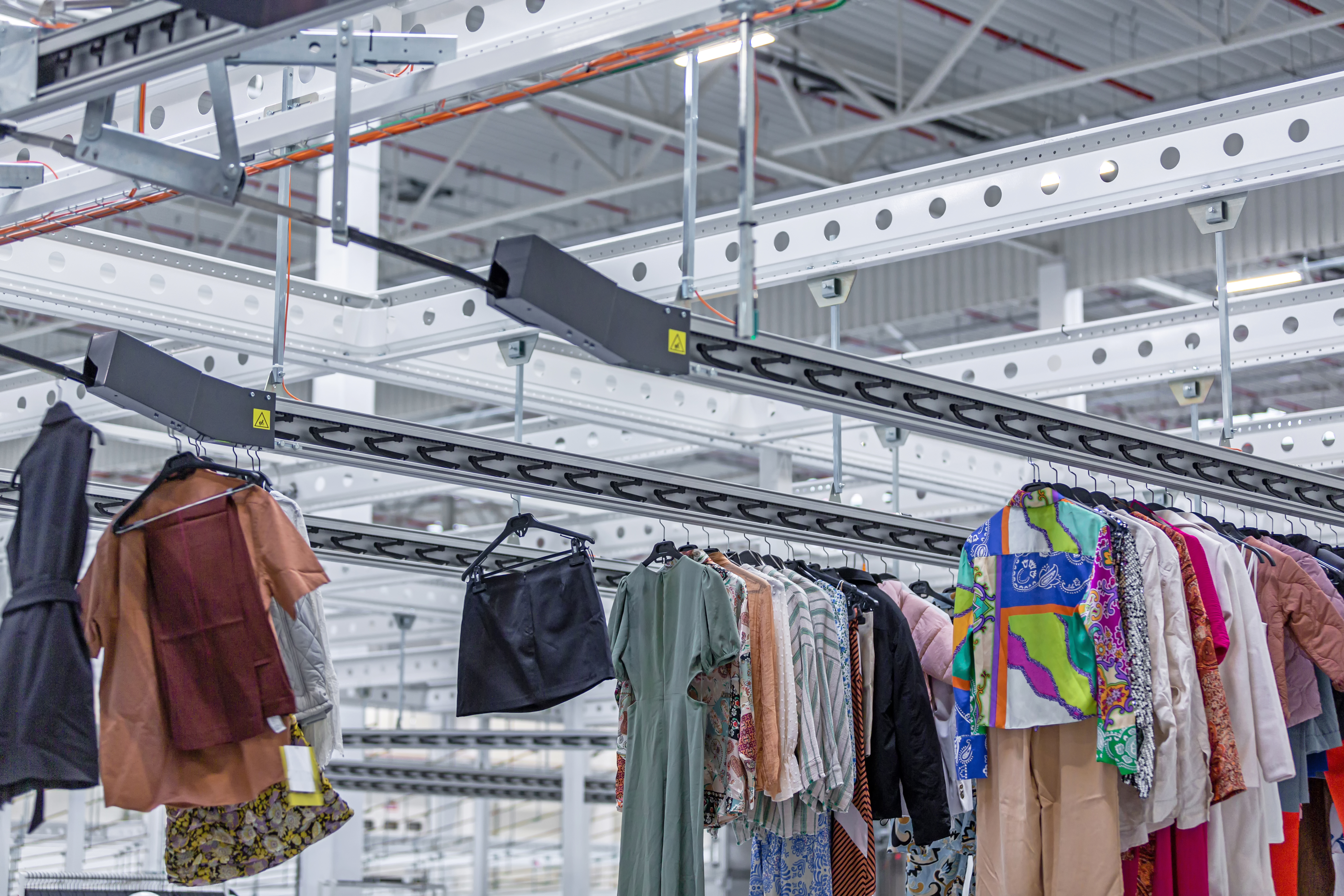
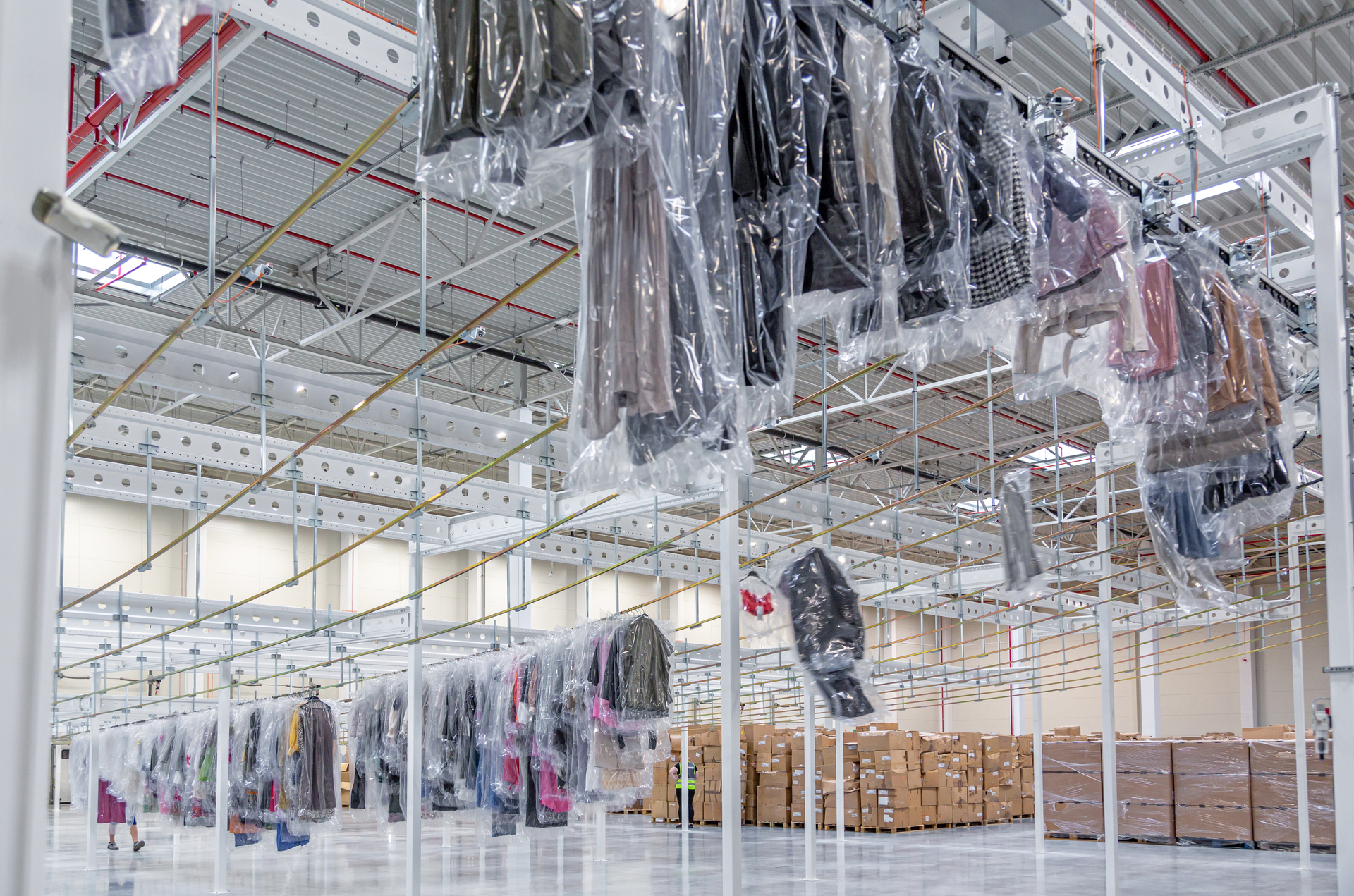
One of the biggest advantages of hanging garment systems is the ability to use the full height of a facility. Instead of occupying valuable floor space, garments are transported and stored overhead.
This allows the ground level to remain clear for packing stations, sorting areas or automated systems. In high-volume logistics environments, even small improvements in space efficiency can have a large operational impact.
Faster and more organised garment handling
In many garment logistics processes, clothing needs to move through the facility on hangers rather than in boxes. This allows garments to remain visible, accessible and ready for further handling without unnecessary repacking.
When garments move on hangers through conveyor systems, the entire handling process becomes easier to organise. Sorting, buffering, steaming and packing can be arranged along a continuous flow, allowing products to move smoothly from one stage to the next.
Hanging garment handling is particularly useful in environments where products need to be processed individually or kept in presentation-ready condition. Keeping garments on hangers helps maintain product quality, reduces unnecessary handling and improves workflow efficiency.
This is especially important in environments such as:
Fashion distribution centres, where garments often remain on hangers throughout storage, sorting and dispatch to retail stores. Hanging systems help manage large volumes efficiently while keeping products organised and ready for delivery.
E-commerce return facilities, where each garment must be inspected, sorted and returned to stock. Handling items on hangers simplifies quality checks and reduces the need for repeated packing and unpacking.
Garment production logistics, where clothing moves between different finishing stages such as quality control, steaming and packaging. Hanging systems allow garments to travel smoothly through these processes without disrupting the workflow.
Industrial laundry operations, where large quantities of garments must move efficiently between washing, drying, finishing and storage. Conveyor-based hanging systems support a continuous process and reduce manual handling.
For facilities managing large garment volumes, organised hanging systems create a clearer workflow and support more efficient day-to-day operations.
In these environments, speed and order are essential. Hanging systems allow large volumes of garments to move through the facility without congestion.
Built for scalable logistics
Garment handling systems are rarely static. As volumes grow or processes change, systems must be able to adapt. Modular conveyor structures and integrated steel support systems allow facilities to expand and modify layouts when needed.
This flexibility makes hanging garment systems suitable for both new facilities and upgrades to existing warehouses.
Summary
Hanging garment systems are becoming an essential part of modern textile logistics. By improving space utilisation, handling efficiency and workflow clarity, they help companies manage large garment volumes more effectively.
For organisations dealing with clothing logistics, investing in the right handling infrastructure can significantly improve both operational efficiency and long-term scalability.